Small LLMs Can Be Good Coldstart Recommenders
Jan 1, 2026
Improving recommendation diversity without retraining from scratch
Aug 1, 2025
Use of machine learning in understanding transport dynamics of land use and public transportation in a developing city
Jan 1, 2024
A Global Forecasting Approach to Large-Scale Crop Production Prediction with Time Series Transformers
Jul 31, 2023
Causal network inference in a dam system and its implications on feature selection for machine learning forecasting
Oct 15, 2022
Amenity counts significantly improve water consumption predictions
Mar 18, 2022
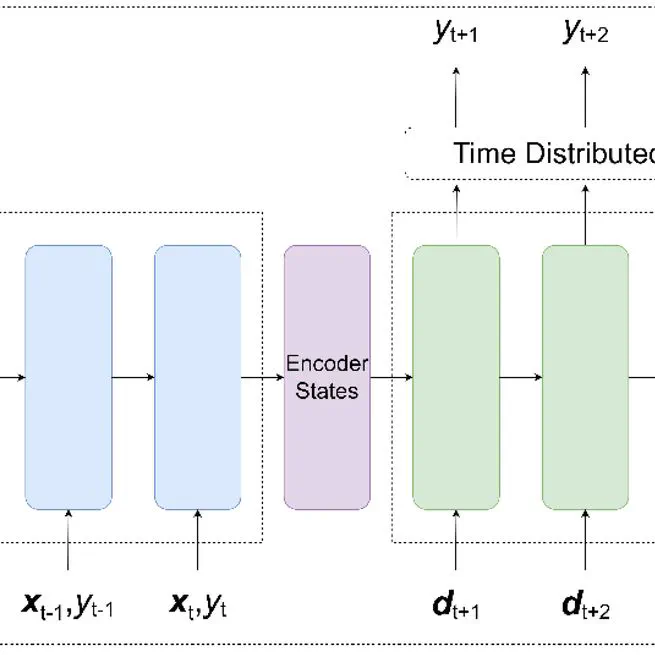
Forecasting Reservoir Water Levels Using Deep Neural Networks: A Case Study of Angat Dam in the Philippines
Jan 1, 2022
Experimental characterization of a non-Markovian quantum process
Aug 26, 2021
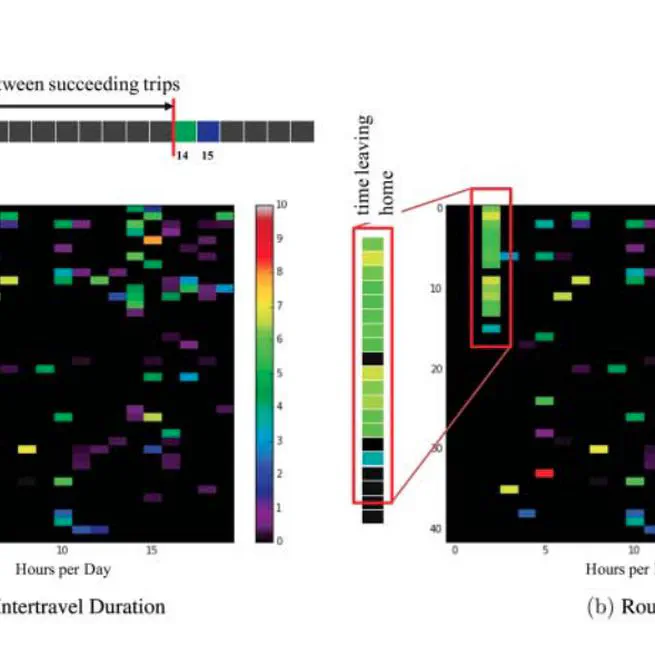
Inferring Passenger Types from Commuter Eigentravel Matrices
Here, using an ensemble of machine learning models, a procedure is demonstrated that classifies passengers (Adult, Child/Student, and Senior Citizen) based on their three-month travel patterns. The method proceeds by constructing distinct commuter matrices, we refer to as eigentravel matrices, that capture a commuter's characteristic travel routine. Comparing various classification models, we show that the gradient boosting method gives the best prediction with 76% accuracy, 81% better than the minimum model accuracy (42%) computed using proportional chance criterion.
Feb 28, 2017
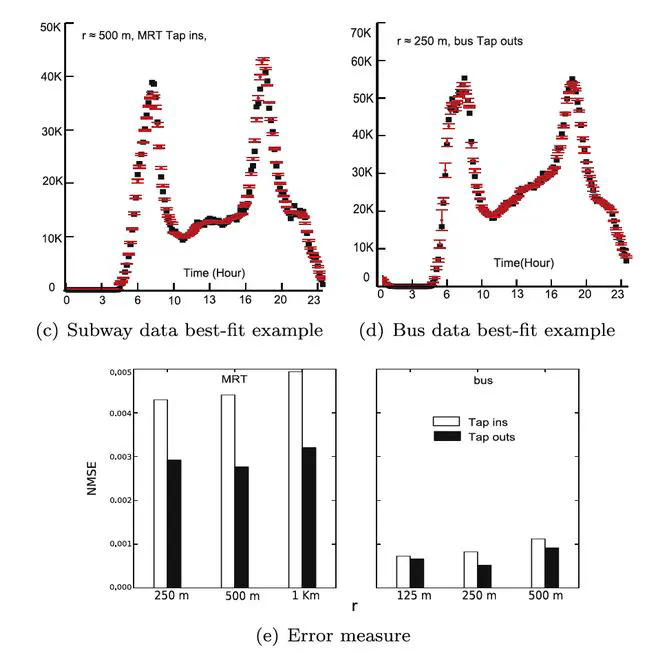
Impacts of land use and amenities on public transport use, urban planning and design
In this work, we particularly focus on the complex relationship between land-use and transport offering an innovative approach to the problem by using land-use features at two differing levels of granularity (the more general land-use sector types and the more granular amenity structures) to evaluate their impact on public transit ridership in both time and space. To quantify the interdependencies, we explored three machine learning models and demonstrate that the decision tree model performs best in terms of overall performance—good predictive accuracy, generality, computational efficiency, and “interpretability”.
Nov 30, 2016